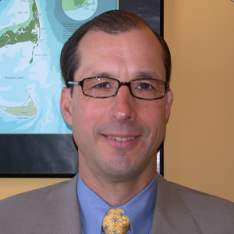
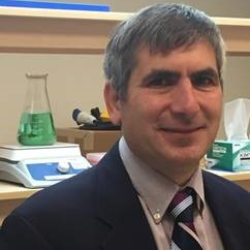
Andrew Bartko, PhD, Executive Director for the Center for Microbiome Innovation, University of California San Diego – Jacobs School of Engineering Executive Director, Center for Microbiome Innovation University of California San Diego
Dr. Andrew Bartko serves as Executive Director of the Center for Microbiome Innovation (CMI) at UC San Diego, which exists to inspire, nurture, and sustain vibrant collaborations between UC San Diego Microbiome experts and industry partners. Serving in this role since July 2020, he is responsible for leading a team focused on fostering and expanding industry and academic collaborations to accelerate microbiome discovery and create innovative technologies to advance the field and enable major clinical breakthroughs. Dr. Bartko holds a concurrent title of Professor of Practice in the Department of Bioengineering at the UC San Diego Jacobs School of Engineering.
Prior to CMI, Dr. Bartko was a Research Leader at Battelle Memorial Institute, a nonprofit global research and development organization committed to science and technology for the greater good. Dr. Bartko has extensive business development, technical knowledge, and application development experience and significant expertise in developing innovative technologies and building industrial research partnerships. He brings over seventeen years of progressive leadership experience in various roles at Battelle and Los Alamos National Laboratory.
Dr. Bartko received his Bachelor of Science in Physical Chemistry from the University of Pittsburgh and his Ph.D. in Physical Chemistry from the Georgia Institute of Technology.
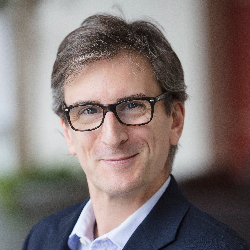
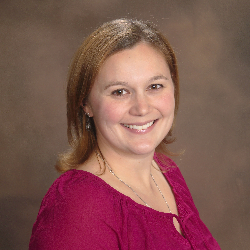
Keith F. Batchelder, CEO & Founder, Genomic Healthcare Strategies CEO & Founder Genomic Healthcare Strategies
Keith Batchelder is the founder and CEO of Genomic Healthcare Strategies (GHS), a consultancy focused on the market changes in healthcare resulting from advances in science, technology, and particularly molecular medicine and genomics. GHS provides strategy and implementation services for companies looking to find and enter the new, emerging markets, grow existing markets or transform current business. GHS has worked with pharma/biotech, diagnostic and the investment community, as well as a widening array of new entrants such as pharmacy benefit managers and wellness companies. At GHS he provides analysis of new markets, channels, partners, and the new science supporting the rapidly evolving practice of medicine and wellness. His career has spanned medical research, clinical practice, and management in start-ups and large organizations. He has helped raise funding, grow companies and also spin new ventures from parent organizations. His operational experience includes serving as chief technical officer of WorldCare International Clinical Trials, where he used biomarkers as surrogate endpoints for successful FDA approvals; as CIO of Harvard Salud Integral, where he helped to raise funding and grow a start-up HMO in Mexico City; as a principal of AMICAS Corp, where he help develop a Web based radiology system, and at Massachusetts General Hospital for eight years, where he conducted research in drug discovery and published in peer reviewed journals. Dr. Batchelder was educated at Middlebury College, the Hahnemann University School of Medicine, received postgraduate training in Medical Informatics at The Boston VA Hospital and completed a fellowship at the Food and Drug Administration. Dr. Batchelder writes and speaks frequently on the topic of personalized medicine (e.g., (Nature Biotechnology, Scientific American conference on Targeted Medicine) and has organized several well attended symposia including one of the first on Personalized Medicine: Breaking Down Barriers and Getting Results in 2007. Dr. Batchelder is one of the first ten volunteers to have their genomes sequenced and published in Harvard Genetics Professor George Church’s Personal Genome Project.
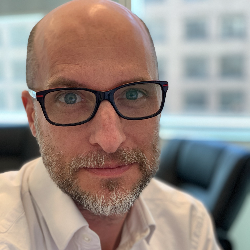
Laurent Chesnel received his undergraduate degree in Biochemistry from the University of Paris (Paris 6, Sorbonne University), going on to earn his Ph.D. in Structural Microbiology from the Structural Biology Institute, University of Grenoble (2003). Subsequently he conducted his post-doctoral research in cellular microbiology in the Department of Microbial Pathogenesis at the Yale University Medical School (2003-2008). Laurent joined the clinical microbiology group at Cubist Pharmaceuticals in the spring of 2008 where he supported late-stage discovery programs, their transitions into the IND-enabling stage, and clinical trials from Phase 1 to Phase 4. Laurent joined the Merck Research Laboratories Scientific Affairs group in 2015 where he supported external clinical research and scientific engagement with the academic research community.
In January 2018, Laurent joined Artugen Therapeutics leading the company’s transition to clinic. Laurent is VP of Research and Development.
Bryan Coburn, MD, PhD, Clinician-Scientist, Division of Infectious Diseases, University Health Network, Scientist, Toronto General Hospital/Research Institute (UHN), Assistant Professor, Departments of Medicine and Laboratory Medicine and Pathobiology, University of Toronto Doctor University Health Network
Bryan Coburn is an infectious diseases consultant and microbiologist at the University Health Network in Toronto, Canada.
Christopher Corzett, PhD, Senior Research Associate, Alfred M. Mann Institute of Biomedical Engineering, University of Southern California Senior Research Associate University of Southern California
Christopher H. Corzett, PhD, is a microbial ecologist interested in how microbes survive and thrive in diverse and dynamic environments. A Molecular Biology Consultant at the Alfred E. Mann Institute for Biomedical Engineering and a Senior Research Associate at the University of Southern California, he’s currently part of a team developing a qPCR-based microbiome diagnostics platform. He obtained his bachelor’s degree in General Biology from UCSD, earned his Molecular Biology PhD at USC, and was a postdoctoral associate at MIT. Over the course of his career, he has studied how microbes evolve under stressful conditions, isolated novel bacteria capable of degrading complex algal polysaccharides, and is a member of the Global Microbiome Conservancy consortium.
Jason M. Crawford, PhD, Director, Yale Chemical Biology Institute, Associate Professor of Chemistry and of Microbial Pathogenesis, Yale University Assoc Prof Yale Univ
Jason M. Crawford carried out his doctoral research at the Johns Hopkins University with Craig A. Townsend. At Hopkins, Jason studied the biosynthesis of bioactive small molecules. Jason then carried out his postdoctoral work at Harvard Medical School with Jon Clardy. At Harvard, Jason focused on bioactive small molecule discovery, bacterial microbiology, and genetics in the context of biosynthetic gene clusters governing interactions between bacteria and animals. Jason joined the Departments of Chemistry and of Microbial Pathogenesis at Yale in 2012 where he is now the Maxine F. Singer Associate Professor of Chemistry and of Microbial Pathogenesis. The Crawford lab focuses on two thematic biological questions at the host-bacteria interface, one from the microbe perspective and one from the host perspective: How do bacterial human/mouse microbiome members regulate host responses, such as inflammation, at the metabolic level? And how do human and mouse macrophages rewire immunometabolism in response to microbial insults?
Michal Daniely, PhD, R&D Director, Head of Microbiome Initiative, Merck Group Dir R&D Merck KGaA
Michal Daniely is heading the Microbiome Initiative within Merck Life Science. Michal has been deeply involved in shaping the company’s strategy within the microbiome research field aiming to develop products and technologies to support the growing need in this market. In this role, she is expanding Merck’s Microbiome portfolio using core competencies such as microbial fermentation, recombinant proteins design & expression, Next Generation Sequencing (NGS), Mass Spectrometry (MS) and more. Michal has joined Sigma-Aldrich (later acquired by Merck KGaA) in 2014. She earned her PhD degree in Human Genetics from the Sackler Medical School, Tel Aviv University, Israel. Prior to joining Merck, she held different roles in medical device and pharma companies, where she managed the R&D activities.
Anik Debnath, Founder and CEO, Tenza Co-founder & CEO Tenza
Anik Debnath is the Co-founder and CEO of Tenza - a spin-out from George Church's lab at Harvard Medical School - and is primarily responsible for both scientific and business development. He holds a B.S. in Applied Physics from Caltech, and a PhD in Biophysics from Harvard University & Health Science Technology Program at MIT.
Mark Driscoll, PhD, CSO & Co Founder, Shoreline Biome CSO & Co Founder Shoreline Biome
Dr. Mark Driscoll has led and supported teams launching transformative new sequencing innovations globally since 2000, including teams at 454 Life Sciences that launched the GS20, GS FLX, and the GS Junior Next Generation Sequencing systems. Mark has experience leading the development of hardware, software, informatics and reagents supporting transformative NGS technology advancements. As a co-founder and CSO of Shoreline Biome, Mark has been instrumental in the development of their high throughput DNA preparation and rRNA amplicon NGS kits, including the first all-in-one 16S-23S long read Amplicon kit and 16S-23S database, that, in combination with the PacBio sequencing system, enables differentiation of closely related bacterial strains using high-throughput, long read rRNA gene sequencing. Dr. Driscoll received his Ph.D. in Biochemistry from the University of Rochester.
Mark’s talk will present data that the combination of lysis, PCR design, long read amplicon, and database are key to identifying microbial strains that influence human health.
Sebastien Guery, PhD, PharmD, Vice President, Global R&D Venturing &Tech Scouting, IFF Health, International Flavors & Fragrances (IFF) VP Global R&D Venturing & Tech Scouting IFF Health
Sebastien Guery, PhD, leads the Global R&D Venture and Tech scouting for IFF (ex- DuPont Nutrition and Biosciences). As part of his role, He is responsible for building the pipeline of microbiome solutions for human applications and acquiring any missing capabilities. Previously, Guery held roles in the pharmaceutical sector from R&D to business development. In the past 15 years, he has worked in ten different countries, including emerging markets. He holds a PhD and a PharmD from Louis Pasteur Univ., Strasbourg, France. and an MBA from IMD in Lausanne, Switzerland.
Thomas Gurry, PhD, Co-Founder and CEO, Vesta Biosciences CoFounder and CEO Vesta Biosciences
I completed my PhD in Computational and Systems Biology at MIT in 2014. Since then, I have worked as a translational microbiome researcher at both MIT and the University of Geneva. In this context, I have worked on numerous clinical trials and studies involving the microbiome and disease, including Inflammatory Bowel Disease and Depression. More recently, I co-founded Vesta Biosciences, a startup dedicated to bringing data-driven, precision prebiotics tailored to an individual's microbiome to improve health outcomes.
Julia H. Kemis, PhD, Senior Scientist, Chemistry Informatics, Merck Research Labs Senior Scientist Merck Research Labs
I received my bachelor’s degree in Biology from Grinnell College, Grinnell, IA in 2013. For my doctorate, I returned to my home state of Wisconsin where I pursued my PhD in Cellular and Molecular Pathology at the University of Wisconsin-Madison (2018). There, my graduate work with Dr. Federico Rey focused on deciphering interactions among gut microbes, host genetics, and metabolic disease. In 2018 I started my postdoc at Merck in the Cheminformatics characterizing microbiome metabolism of small molecules.
Todd Krueger, President & CEO, AOBiome LLC President & CEO AOBiome LLC
Todd Krueger is the Chief Executive Officer, President and a Director of our Company. He is primarily responsible for the overall management, corporate development and strategic planning of our Company and has been with the company since 2015. Mr. Krueger graduated from Northwestern University, United States, with a Bachelor of Economics degree with Highest Distinction, and earned his Master of Business Administration degree from the Kellogg School of Management, Northwestern University, United States.
Prior to joining us, Mr. Krueger had over 20 years of experience in healthcare strategy, business development, operations and finance. He started his career as a consultant for Bain and Company, a management consulting firm, from 1990 to 1993, responsible for providing strategic analysis and solution implementation to Fortune 500 clients. In 1999, Mr. Krueger co-founded Fluidigm Corporation, which is principally engaged in the design, manufacture and sale of biological research equipment and is currently listed on NASDAQ (stock symbol FLDM), where he served as its chief financial officer and the vice-president of business development from 1999 to 2002, responsible for strategy development, finance, business development, and operations. From 2006 to 2013 he held various senior business development and strategy roles at Applied Biosystems Inc. and later Life Technologies Corporation (which was formed as a result of the merger between Applied Biosystems Inc. and Invitrogen Corporation in 2008)), where his last role was head of business development for molecular medicine. From 2013 to 2014, he was Chief Financial Officer of Claritas Genomics, Inc., a genetic diagnostics laboratory based in the United States, and from 2014 to 2015, he was the director of strategy and operations for the Broad Institute, a biomedical and genomic research center based in the United States. He was responsible for overseeing the commercialization of the genetics platform.
Mr. Krueger currently serves on the board of directors of General Automation Laboratory Technologies, Inc. (GALT), a microbiome tools company and Tenza Bio, a spinout of George Church's lab using engineered microbes to orally deliver biologics to the mucosa.
Beth A. McCormick, PhD, Worcester Foundation Chair in Biomedical Research; Professor & Vice Chair, Department of Microbiology and Physiological Systems; Founding Director, University of Massachusetts Center for Microbiome Research Prof University of Massachusetts Medical School
Dr. McCormick earned her PhD in Microbiology in the topic area of intestinal ecology and completed postdoctoral training at Harvard Medical School. She remained on the faculty of Harvard Medical School where she was an Associate Professor of Pediatric Gastroenterology, and Director of Research for the Mucosal Immunology and Biology Research Center at Massachusetts General Hospital. In 2008, she joined the University of Massachusetts Medical School where she is Professor and Vice Chair of the Department of Microbiology and Physiological Systems. Dr. McCormick is also the Founding Executive Director of the University of Massachusetts Center for Microbiome Research, which she established in 2014. Dr. McCormick is one of the original pioneers in the field now known as Cellular Microbiology. Her work provided the first evidence that epithelial cells in response to pathogen contact orchestrate a pro-inflammatory program, which recruits inflammatory cells. Dr. McCormick has since identified new, previously unidentified and unexpected virulence mechanisms that are key to the inflammatory response, leading to both novel biological principles of host-microbe interactions and therapeutic intervention strategies for the treatment inflammatory bowel disease, and cancer. Her work continues to identify novel ways in which microbes interact with the intestinal epithelium, publishing over 150 original research papers and opinion pieces in this area. Dr. McCormick is an elected a Fellow of the American Academy of Microbiology, is Editor-in-Chief the of the journal Gut Microbes, and an Associate Editor of the journal Gastroenterology. She is also a Scientific Founder of the start-up company, Bacainn Therapeutics.
David A. Mead, PhD, Co-Founder & CEO, Varigen Biosciences Co Founder & CEO Varigen Biosciences
David Mead is CEO and Co-Founder of Varigen Biosciences Corp., the Natural Products by Design Company. Varigen has developed a new generation of synthetic biology tools that accelerate drug discovery tenfold, enabling the production of “unnatural†drugs from nature. He also founded and built Lucigen into a multimillion-dollar company before its sale in 2018 to LGC. Dr. Mead has developed dozens of molecular products, is the inventor of TA cloning (a billion-dollar product) and has 63 peer-reviewed publications and 11 issued patents.
Sandrine Miller-Montgomery, PharmD, PhD, President and CEO, Micronoma, Inc. President and CEO Micronoma
Dr. Sandrine Miller-Montgomery is Micronoma CEO, a start-up company focusing on the development and commercialization of cancer diagnostic solution using Liquid Biopsy targeting the microbial markers. Previously, she was executive director of the Center for Microbiome Innovation, which she co-directed with Pr. Rob Knight at UC San Diego. Her team focused on expanding industry and academic collaborations of microbiome research in various domains such as clinical applications (new drug pathway identification, novel diagnostic biomarkers discovery – such as the IP that led to Micronoma), environmental science (e.g., identification of natural products from ocean sediment), or consumer world (e.g., nutrition and diet role on our microbiome and metabolome). Before her foray in academia, she had a long career in Biotech and most recently had led MO BIO Laboratories, now a QIAGEN Company, having started as their director of sales and marketing where her team contributed to the consistent business growth resulting in its acquisition.
Norman Moore, PhD, Volwiler Senior Associate Research Fellow, Director, Infectious Diseases, Scientific Affairs, Abbott Laboratories Dir Scientific Affairs Abbott Labs
Dr. Moore received his Bachelor's Degree from Dartmouth and his PhD in microbiology from the University of New Hampshire. He has eight US and 39 non US patents in the field of infectious disease diagnostics along with numerous publications and presentations. He has sat on medical committees such as the point-of-care groups for the College of American Pathology and the Clinical Laboratory Standards Institute and helps write guidelines/best practices for additional groups. At this time, he is the global director of scientific affairs for the Rapid Diagnostic division of Abbott Laboratories. He received the Volwiler Fellowship Award for lifetime achievement in science in 2019
Cynthia L. Sears, MD, Professor of Medicine, Oncology, Molecular Microbiology & Immunology, Johns Hopkins University School of Medicine, Bloomberg School of Public Health, Microbiome Program Leader, Bloomberg-Kimmel Institute for Cancer Immunotherapy and Director, Johns Hopkins Germfree Murine Facility Prof Johns Hopkins Univ
Cynthia L. Sears, MD is Professor of Medicine, Oncology and Molecular Microbiology and Immunology at the Johns Hopkins University School of Medicine and the Bloomberg School of Public Health, the Microbiome Program Leader of the Bloomberg-Kimmel Institute of Cancer Immunotherapy, the Director of the Germfree Murine Core and Co-Director of the Microbiome Forum at Johns Hopkins. Through translational and bench research stemming from her training as an infectious diseases specialist, she investigates how enteric bacteria [particularly enterotoxigenic Bacteroides fragilis (ETBF), Fusobacterium spp, pks+ Escherichia coli] and the microbiome promote colon carcinogenesis and modulate cancer immunotherapy responses. Using human tissues and mouse models combined with microbiology, bioinformatics and immunologic methods, the Sears laboratory has identified the IL-17 and myeloid mechanisms of ETBF colon carcinogenesis and the high prevalence and carcinogenicity of mucus-invasive biofilms in colon cancer.
Emily Vogtmann, PhD, MPH, Investigator, Metabolic Epidemiology Branch, Division of Cancer Epidemiology & Genetics, National Cancer Institute (NCI) Investigator NIH NCI
Dr. Emily Vogtmann received her BS in biochemistry and molecular biology and BA in Spanish from Michigan State University in 2005. She went on to receive an MPH in international health epidemiology from the University of Michigan in 2009, where she investigated human papillomavirus and cervical cancer awareness and mortality trends in Mexico. Dr. Vogtmann completed a PhD in epidemiology in 2013 at the University of Alabama at Birmingham. Her dissertation focused on cruciferous vegetable intake, GST gene polymorphisms, and colorectal cancer among men in Shanghai, China, completed in collaboration with the Shanghai Cancer Institute and Vanderbilt University Medical Center. Dr. Vogtmann joined DCEG as a Cancer Prevention Fellow in the Metabolic Epidemiology Branch in August 2013 and was promoted to Research Fellow in June 2016. She was appointed to the position of Earl Stadtman Tenure-Track Investigator in 2018. Dr. Vogtmann’s research focuses on: 1) the association between the human microbiome and cancer risk; 2) how the human microbiome may mediate associations between exposures and cancer risk; and 3) the association between microbiome-related exposures and conditions (e.g., tobacco, periodontal disease) with cancer risk. Dr. Vogtmann has received a number of awards for her work, including the NIH and DCEG Fellows’ Award for Research Excellence and the NCI Director’s Innovation Award.